




You’ve chosen your MLOK rail. You’ve heard the debate. But now you face a wall of conflicting advice. The “Kinect vs. Hard Mount” decision isn’t one-size-fits-all. The right answer for your bipod is the wrong answer for your vertical grip.
This is the ultimate, practical guide to ending the debate. We’re going to stop talking in vague terms of “speed vs. security” and give you a definitive winner for every major accessory category.
To do this, we’ll use the two perfect examples:
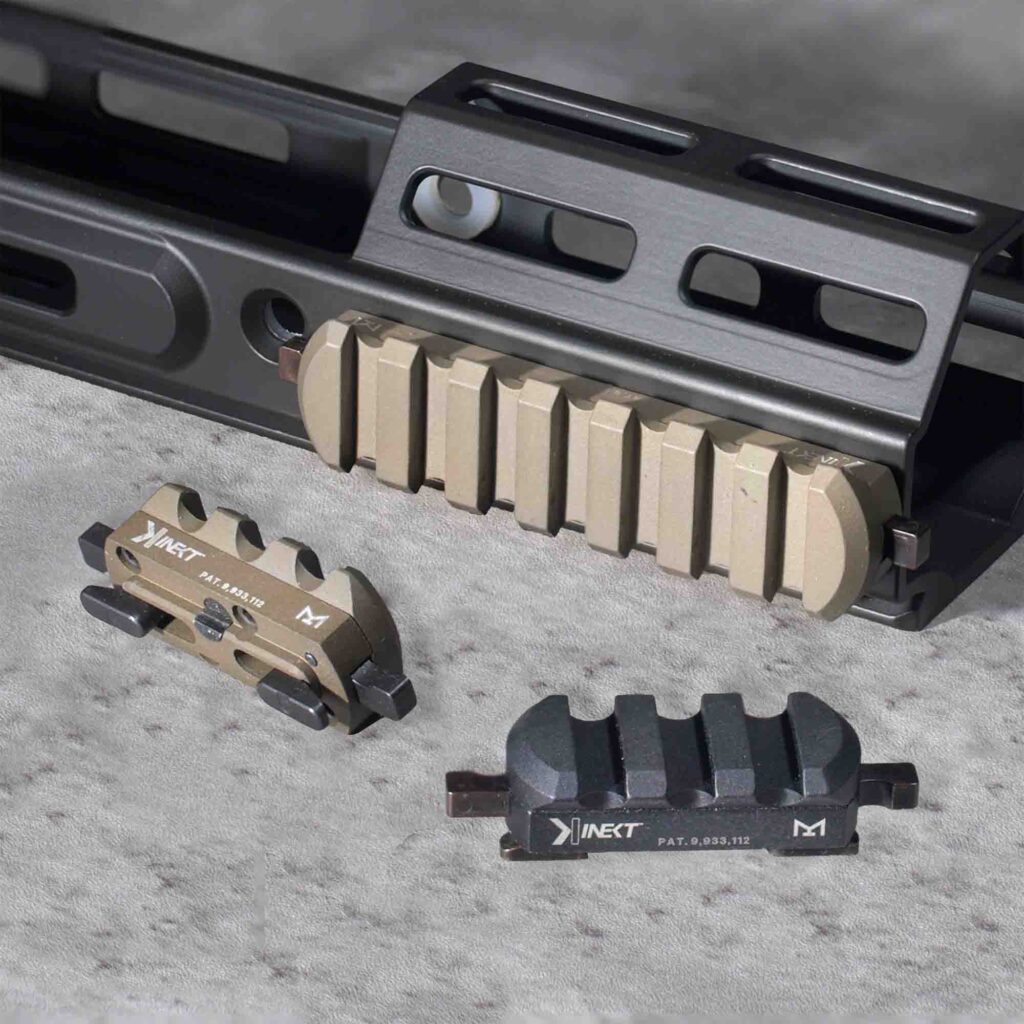
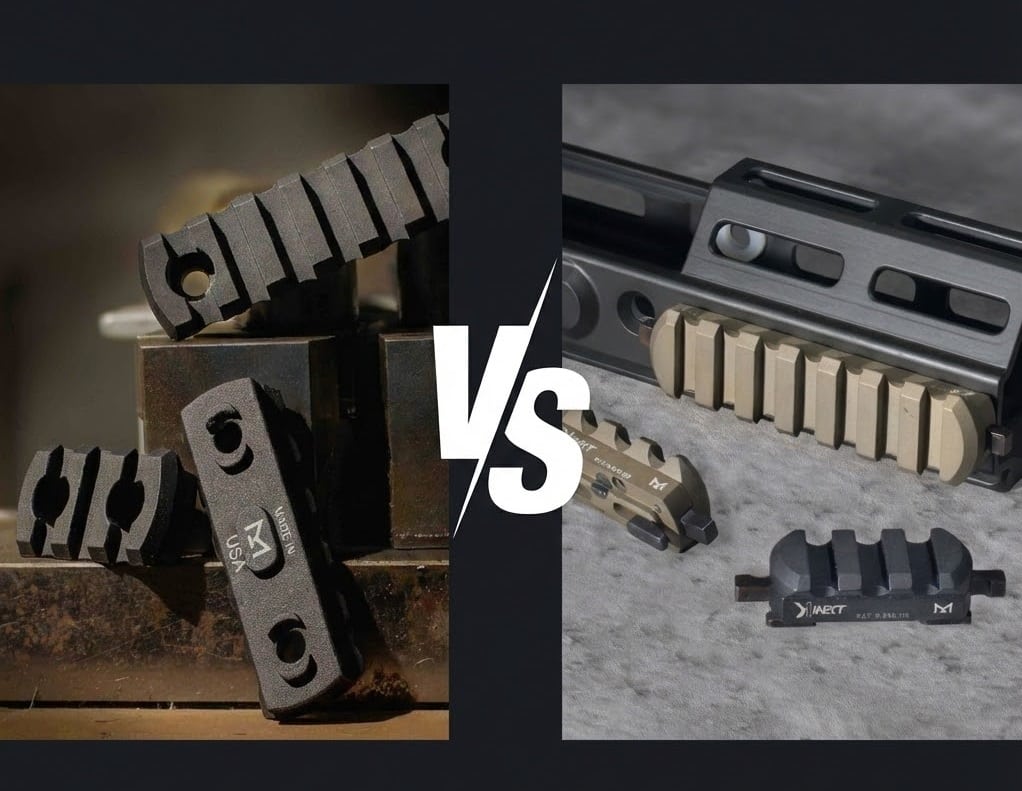
- The QD Mount: KDG Kinect, the revolutionary tool-less system.
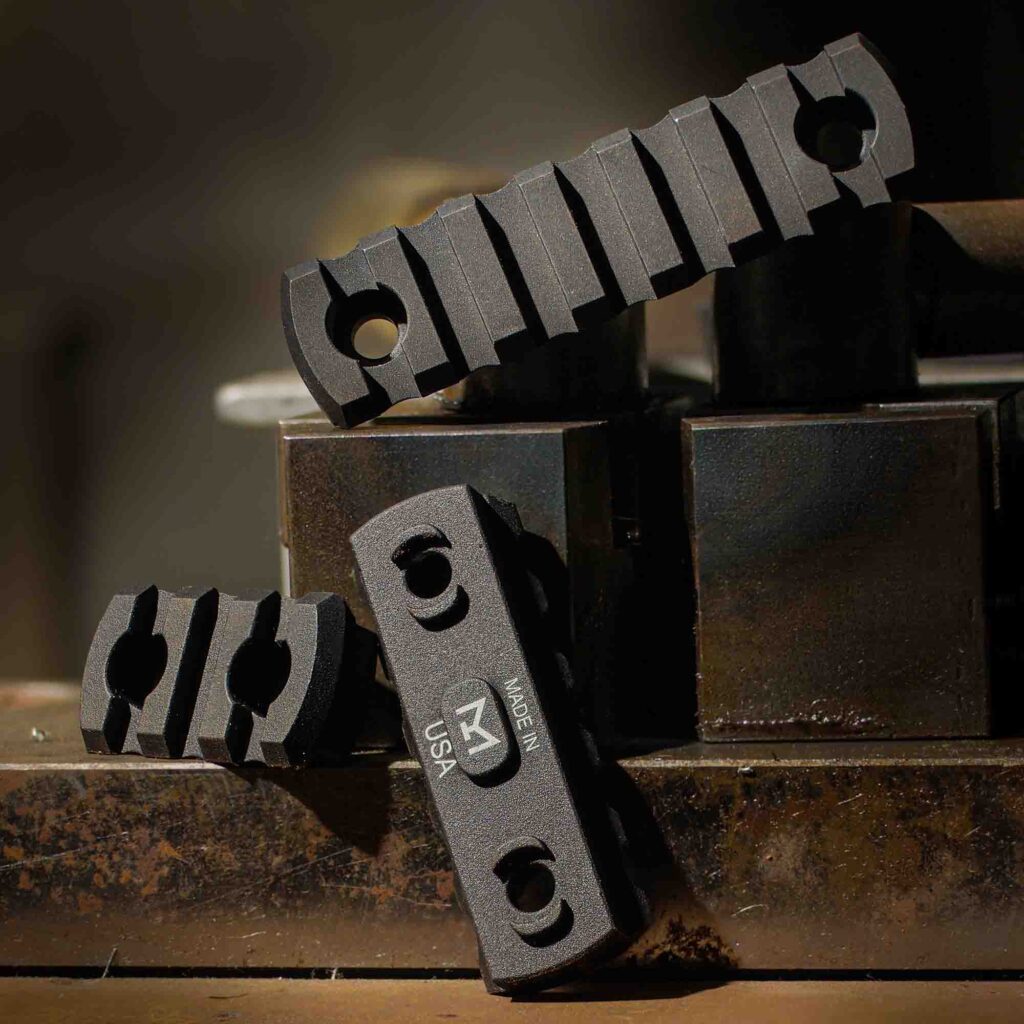
- The Hard Mount: KDG’s standard MLOK Hard Mounts, the “set-it-and-forget-it” duty-grade standard.
Let’s build your rifle, one accessory at a time.
A 15-Second Refresher: The Core Conflict
Before the takedown, here’s the only theory you need to know.
- KDG Hard Mount: Uses a T-Nut and screw. Installed with an Allen key and torqued to spec. Its identity is SECURITY.
- KDG Kinect: Uses a tool-less, spring-loaded wedge system. Installed by pressing it on, removed by pressing two buttons. Its identity is SPEED.
Now, let’s apply this to your gear.
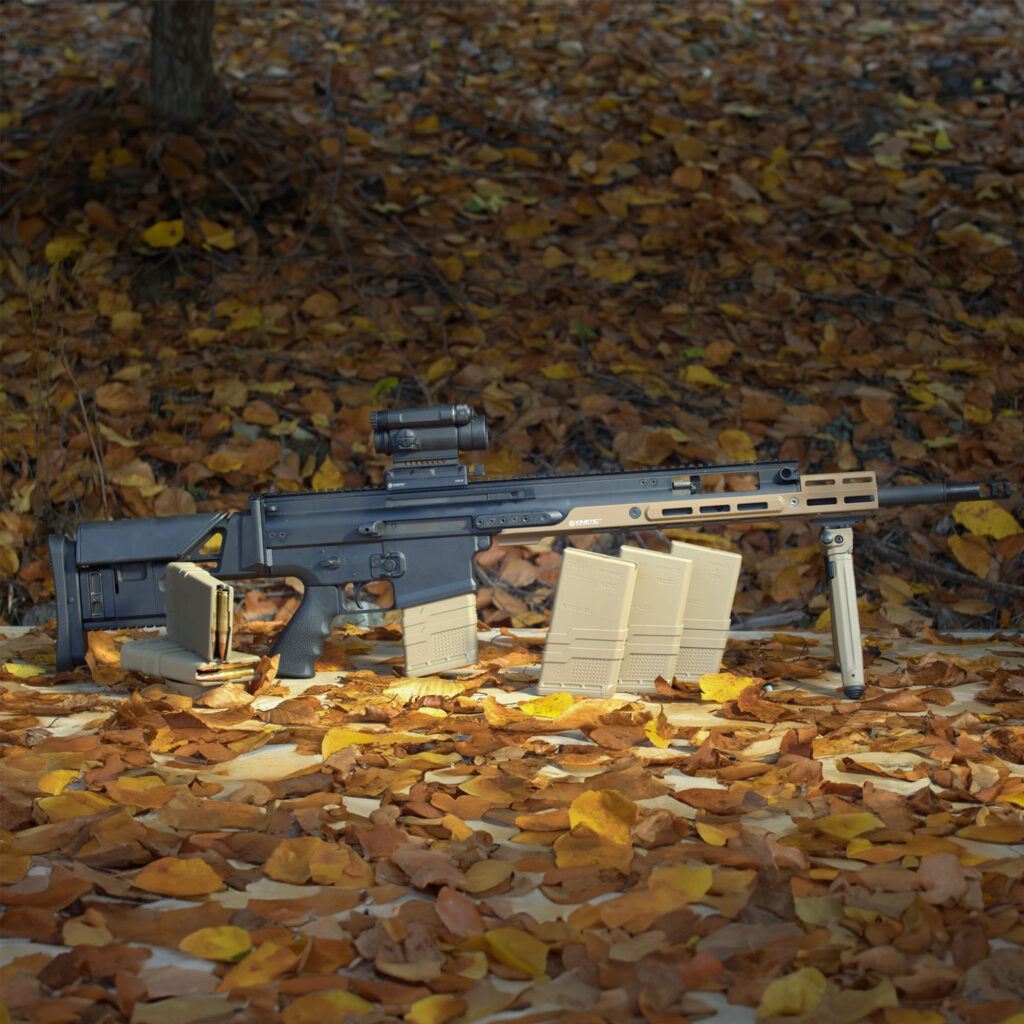
1. For Bipods: The “It Depends” Winner
This is the most common and most debated category. The answer depends entirely on your use case.
✅ Winner: KDG Kinect
You should use a Kinect mount for your bipod if:
- You are a multi-rifle owner and want to “hot-swap” one high-end bipod between several guns.
- You are a hunter who only attaches the bipod in the field for a single, stationary shot.
- You are a range shooter who only uses a bipod for zeroing, then removes it for other drills.
Kinect is a convenience and logistics solution. It lets you treat your bipod like a temporary, on-demand tool.
✅ Winner: KDG Hard Mount
You MUST use a Hard Mount for your bipod if:
- You are a precision shooter who “heavily loads” the bipod (pushing forward into it) for maximum stability.
- You are running a heavy-recoiling rifle (KDG advises against Kinect for calibers over .308).
- Your bipod lives on your rifle as a permanent, dedicated component.
A hard-mounted bipod becomes a rock-solid, structural part of the rifle, essential for true precision and stability under heavy recoil.
Verdict: For casual or multi-gun use, Kinect is a game-changer. For precision or heavy-duty use, a Hard Mount is non-negotiable.
2. For Vertical Grips, Handstops, & Barrier Stops: The Clear-Cut Winner
This one is not a debate.
🏆 Winner: KDG Hard Mount
Do not use a QD system for a grip or handstop.
These accessories are, by definition, “high-stress” components. You are designed to pull, push, and brace against them. You will use them to pull the rifle into your shoulder, jam it against a barricade, or control recoil.
This is exactly the kind of “loading” force that can, and will, cause a tool-less QD system to disengage. A vertical grip “popping off” in your hand during a critical moment is a catastrophic failure.
Verdict: Your grips and handstops must be Hard Mounted. They are structural, not situational.
3. For Weapon Lights & Lasers: The Most Critical “It Depends”
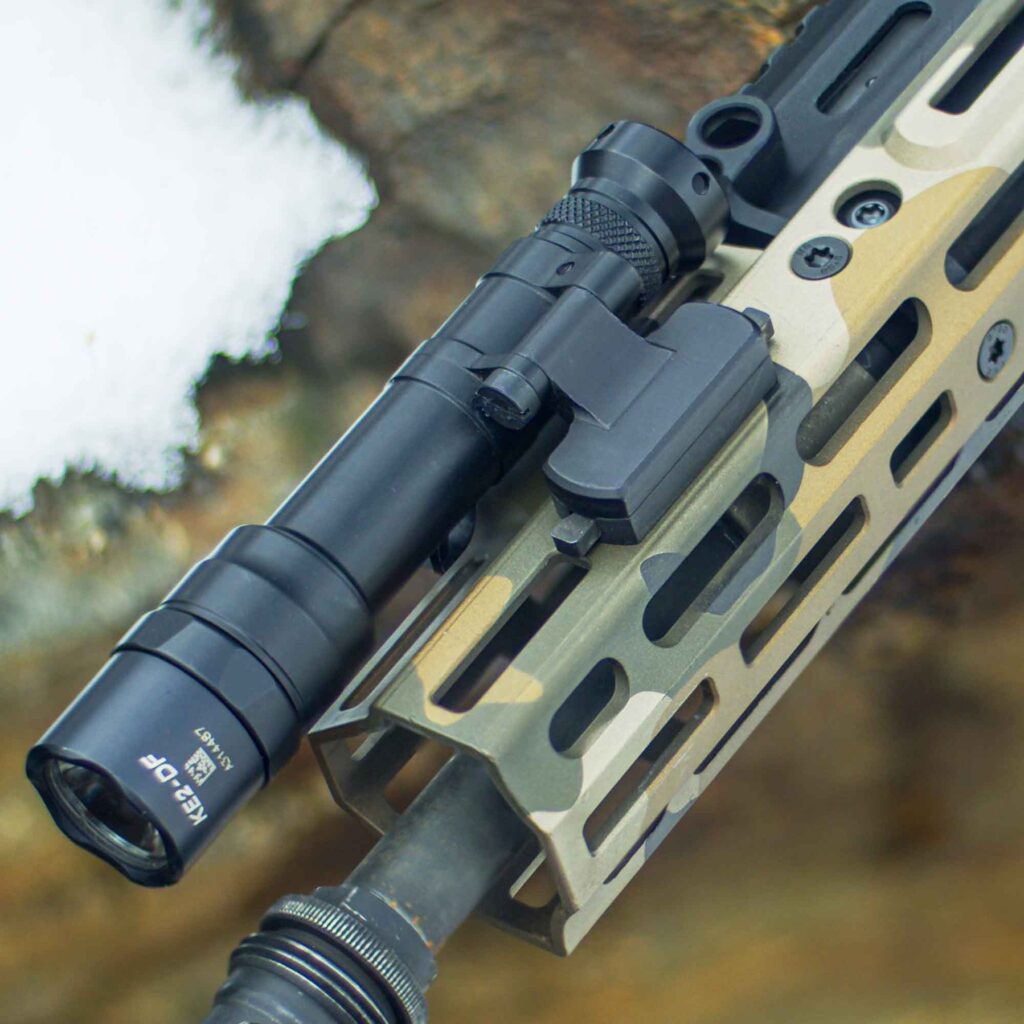
This is the most critical decision, and the existence of KDG’s own Kinect light mounts (like the Kinect Universal Offset Mount and Kinect Surefire Pro Mount) makes it a nuanced one.
✅ Winner: KDG Kinect (For Convenience & Logistics)
KDG created Kinect light mounts for the same reason they made them for bipods: convenience and cost-savings. You should use a Kinect light mount if:
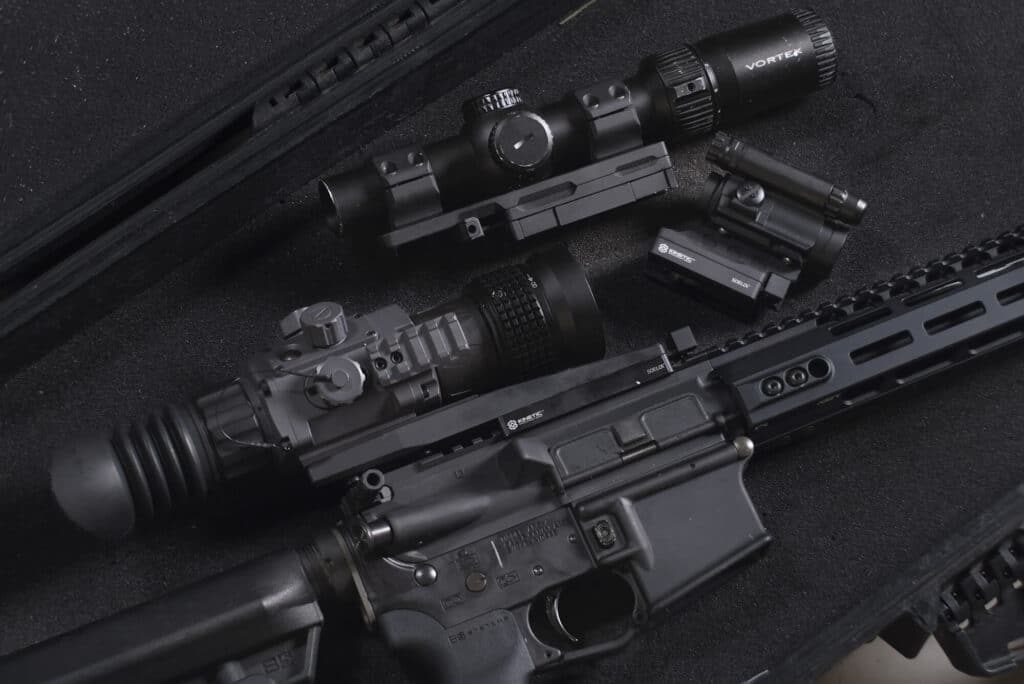
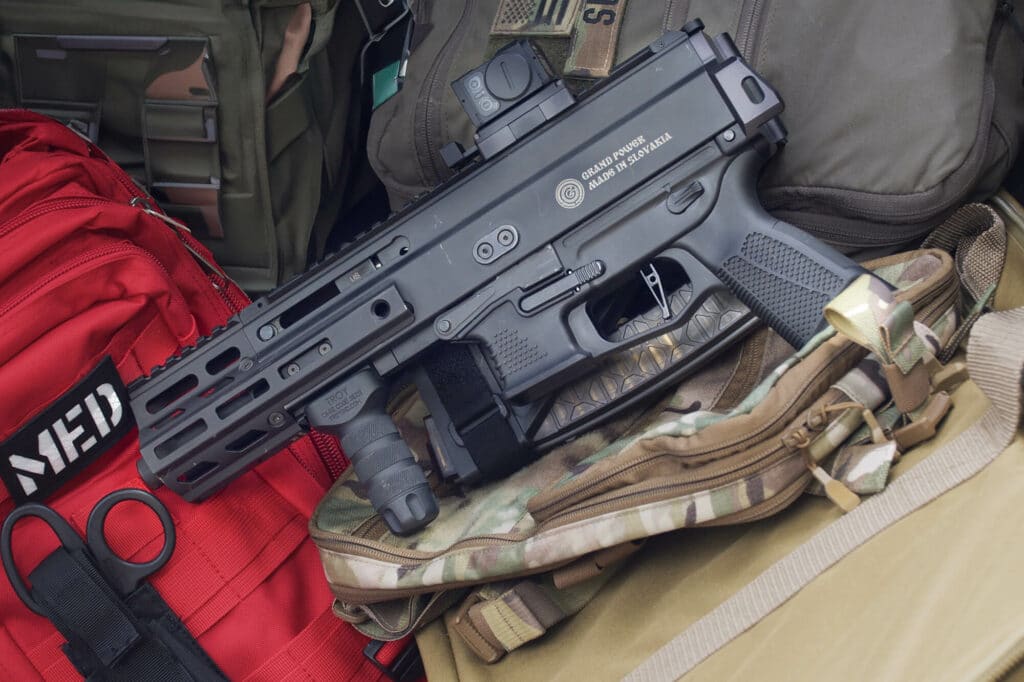
- You have one expensive light (e.g., Surefire, Streamlight) that you want to swap between multiple rifles (like your AR-15 and your PCC).
- You have a hunting rifle and only want to attach a light during twilight hours, keeping the rifle slick the rest of the day.
- It is for a range-only gun where “bomb-proof” duty use is not the primary concern.
✅ Winner: KDG Hard Mount (For Duty & Defense)
This remains the professional standard for any “bet-your-life-on-it” firearm. You MUST use a Hard Mount if:
- The rifle is for home defense, patrol, or duty use. In a defensive scenario, the risk of your light being snagged and pulled off, however small, is unacceptable.
- You are mounting a Laser Aiming Module (LAM). Lasers must hold zero. Kinect is not rated for this. A hard-torqued mount is the only way to ensure your laser remains zeroed.
- You use your light as a brace or impact point (e.g., pressing against a barricade). This high-stress use demands a Hard Mount.
Verdict: For a “bet-your-life-on-it” rifle, a Hard Mount is the professional standard. For convenience, “hot-swapping,” or range use, the KDG Kinect light mount is a brilliant, specialized tool. Critically, ALL lasers MUST be Hard-Mounted, without exception.
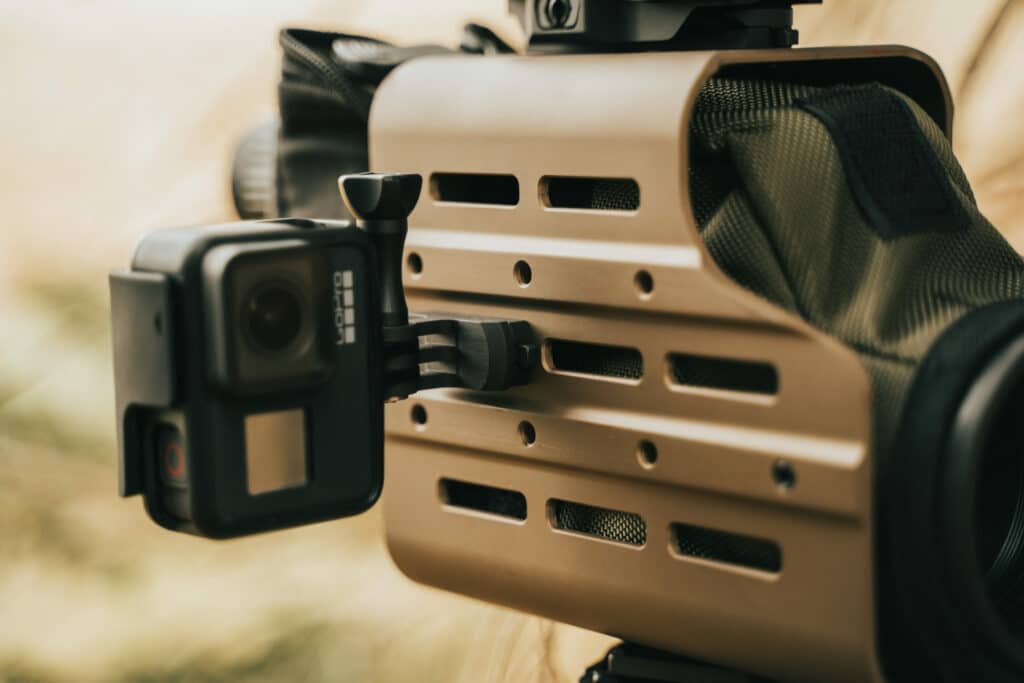
4. For “Situational” Gear (Chronographs, GoPros, etc.): The Obvious Choice
Now we get to the “other” gear—the accessories that have no business living on your rifle full-time.
🏆 Winner: KDG Kinect
This is precisely what the Kinect system was designed for.
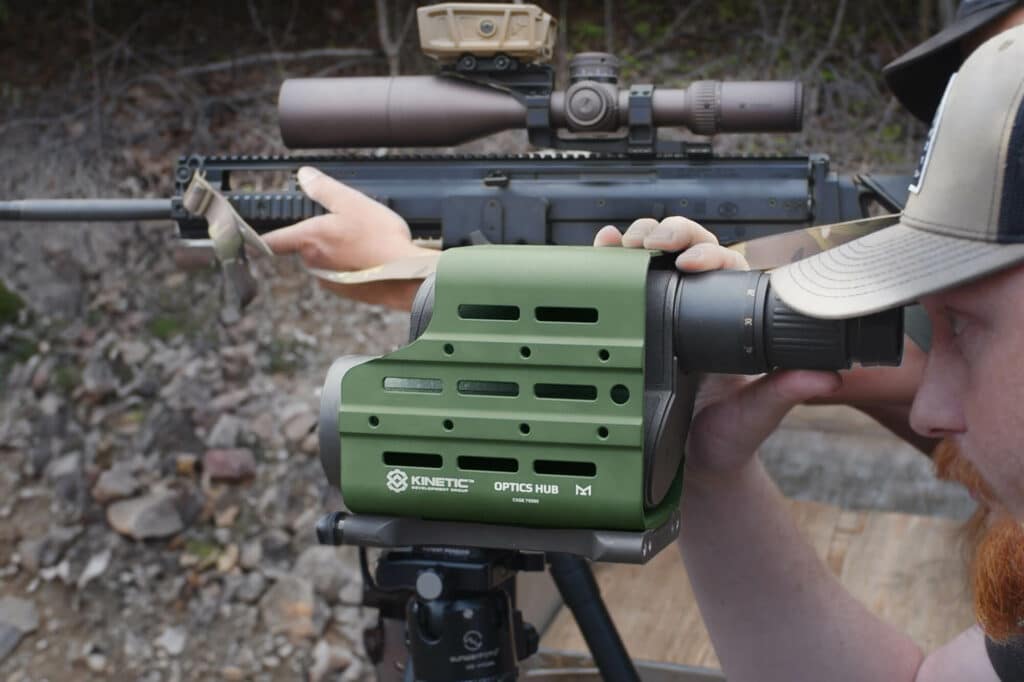
- Chronographs: Mounting a Garmin or Athlon on your handguard for a few shots to test velocity? Kinect is the perfect tool.
- GoPro / Camera Mounts: Want to film a 3-Gun stage without a clunky mount on your rifle for the other 90% of the day? Kinect.
These are all items you want on for a moment and off immediately after, with zero hassle.
Verdict: For any temporary, non-critical, “range-day” accessory, KDG Kinect is the obvious and brilliant solution.
The Ultimate Build: A Hybrid System for a Pro-Level Rifle
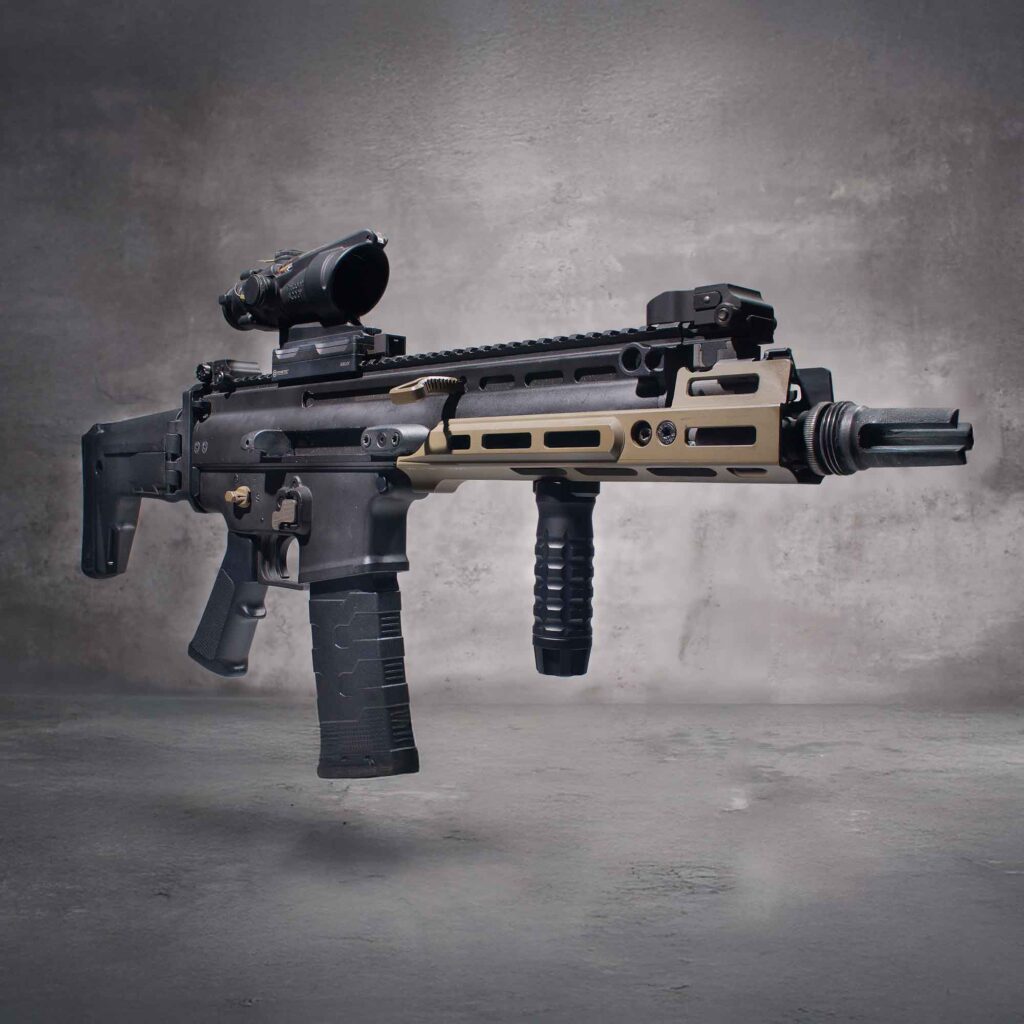
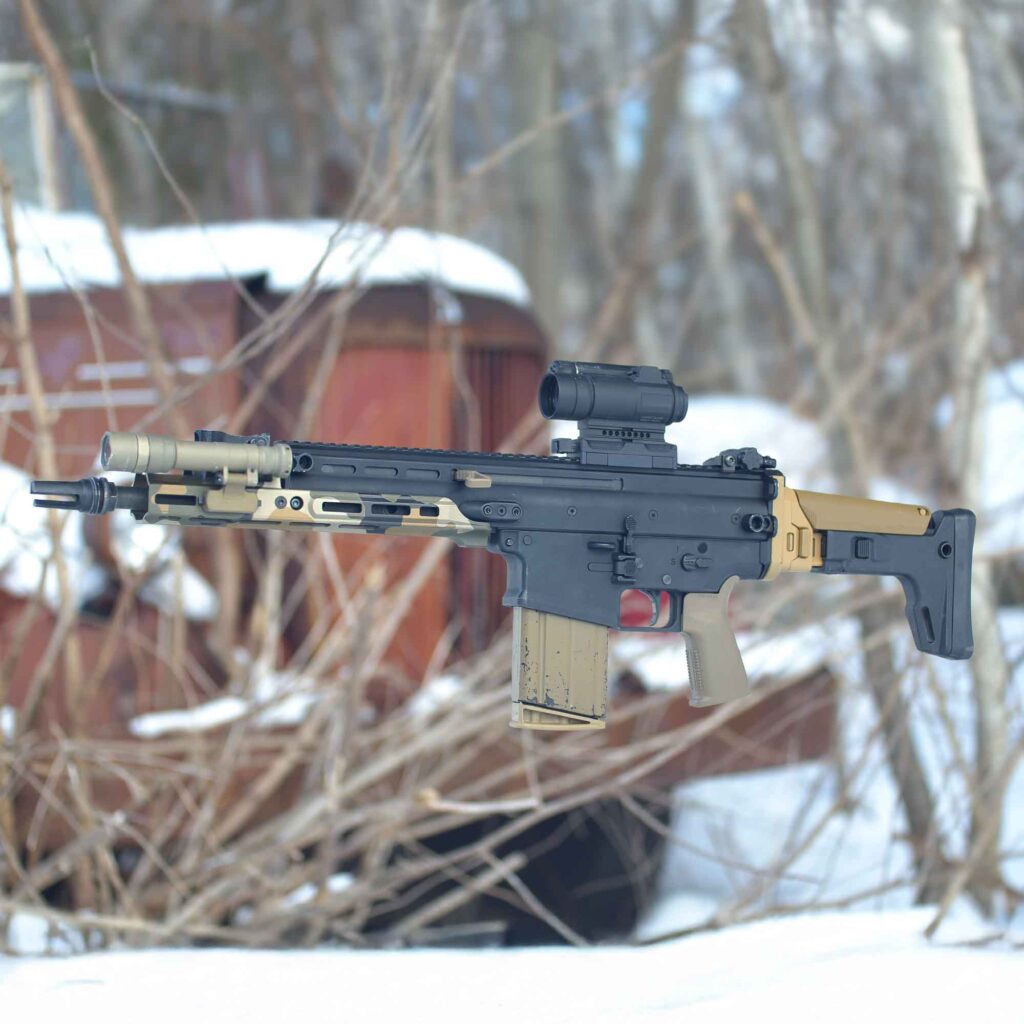
As you’ve seen, the “Kinect vs. Hard Mount” debate is a false choice. The real pro-level build is a Hybrid System that uses both for their specific strengths.
Here is what that “Pro” rifle looks like:
- Foundation (Hard-Mounted):
- Laser: On a KDG Hard Mount.
- Vertical Grip/Handstop: On a KDG Hard Mount.
- Sling Socket: A KDG Hard Mount QD Sling Mount.
- Primary Weapon Light: (On a duty/defense gun) On a KDG Hard Mount.
- Flexibility (Kinect-Mounted):
- Bipod: On a KDG Kinect direct-mount, ready to be attached for a precision shot or swapped to another rifle.
- Situational Light: (On a range/hunting gun) On a KDG Kinect light mount.
- Situational Gear: A spot on the rail is left open, ready to accept a Kinect-mounted chronograph or camera.
Stop asking “which is better?” and start asking “which is right for this specific job?” By doing so, you move from a rifle of compromises to a purpose-built, optimized system.


