

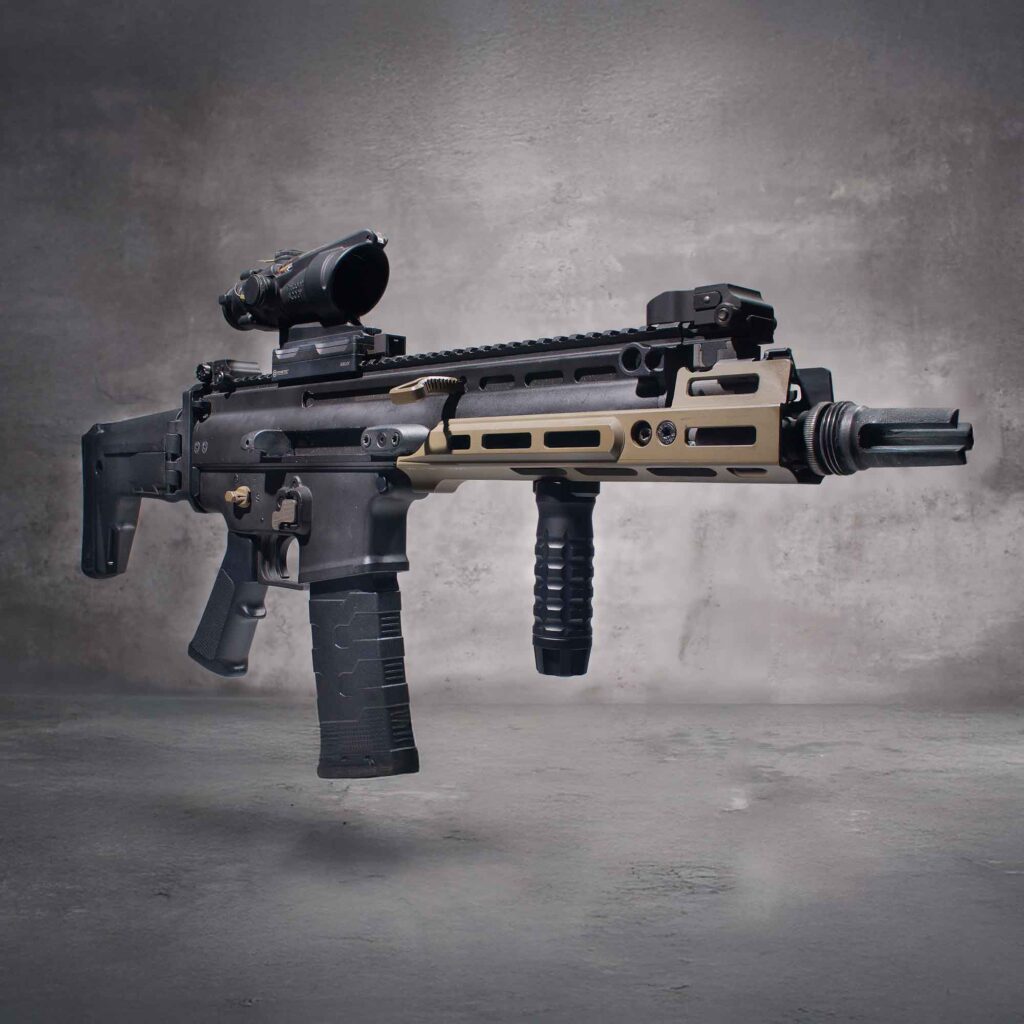
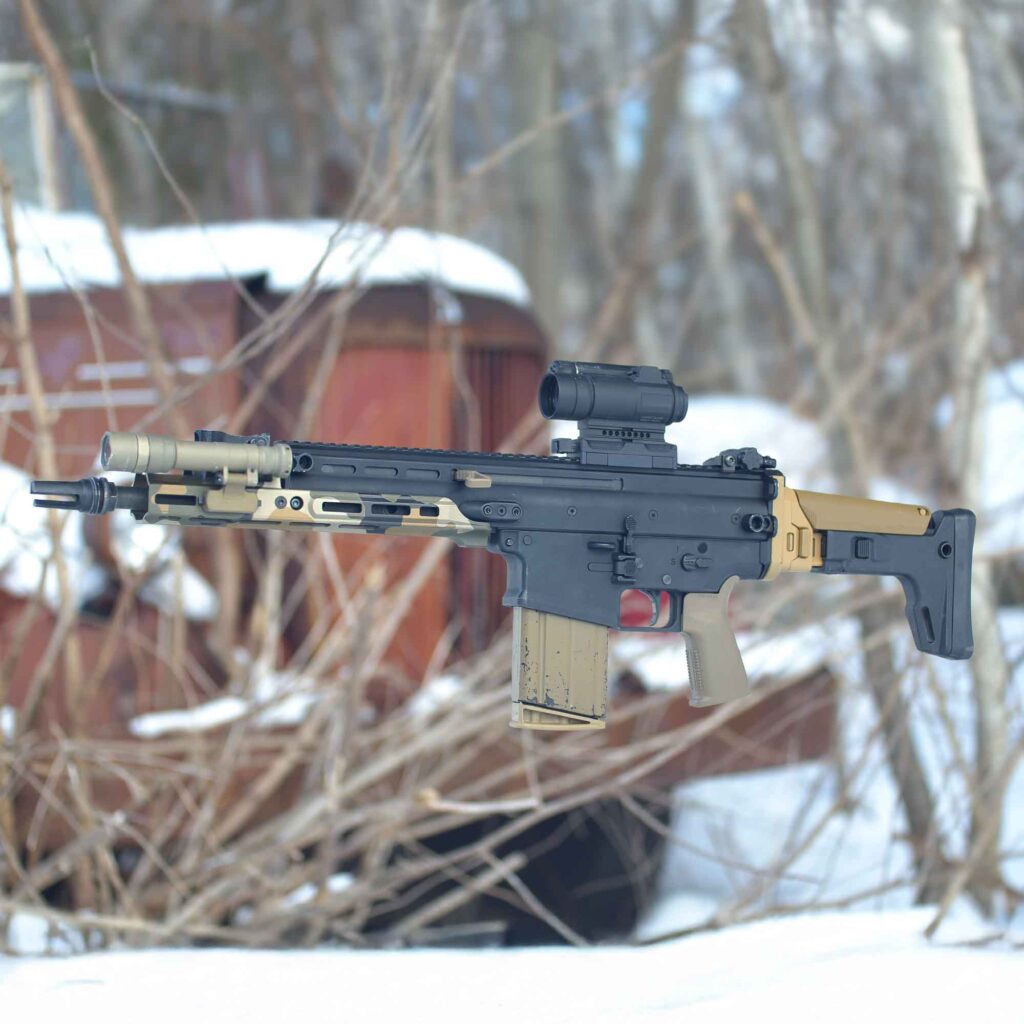
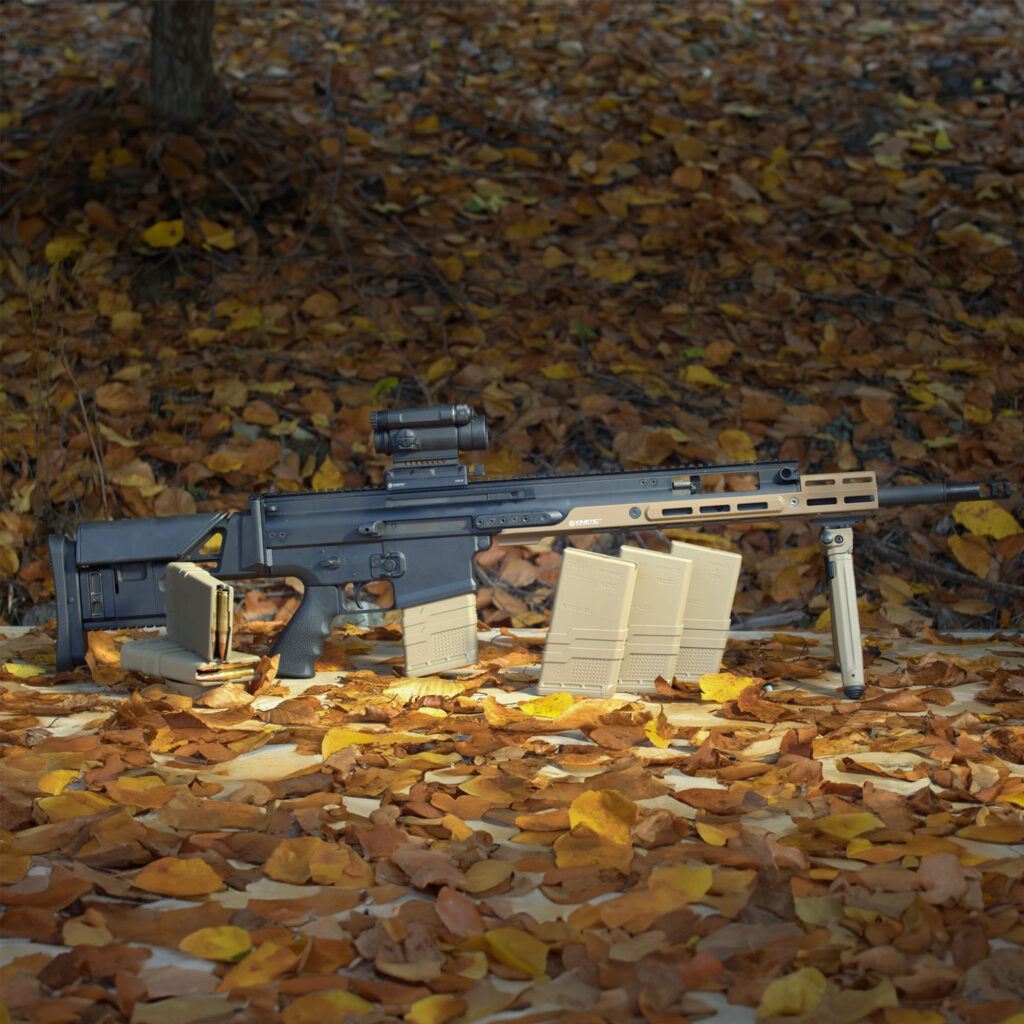




For decades, true firearm modularity has come with a catch: the Allen key. The MLOK system, while a brilliant standard, still requires you to unbolt and re-torque hardware every time you want to add or remove an accessory. It’s secure, but it’s not fast.
Kinetic Development Group (KDG) saw this limitation not as a feature, but as a problem to be solved.
The solution they engineered is Kinect, a revolutionary quick-detach (QD) system that completely reimagines what MLOK modularity can be. It is a system that allows you to attach and detach MLOK accessories in seconds, with zero tools, transforming any MLOK rail into a high-speed, “hot-swappable” platform.
This is the definitive guide to the KDG Kinect line. We will deconstruct the mechanism, explore its profound benefits, define its critical limitations, and identify exactly who this game-changing system is for.
What is KDG Kinect?
At its core, KDG Kinect is a tool-less, quick-detach mounting system for MLOK rails.
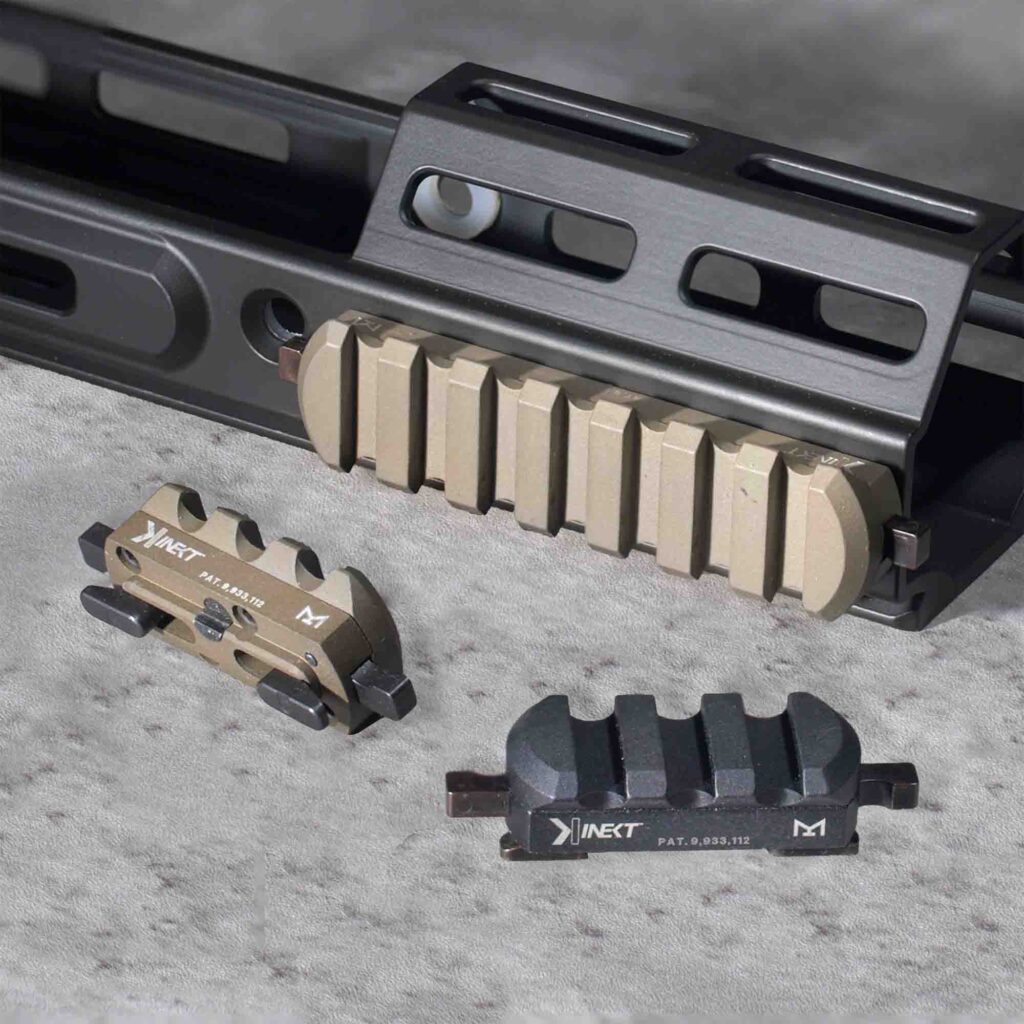
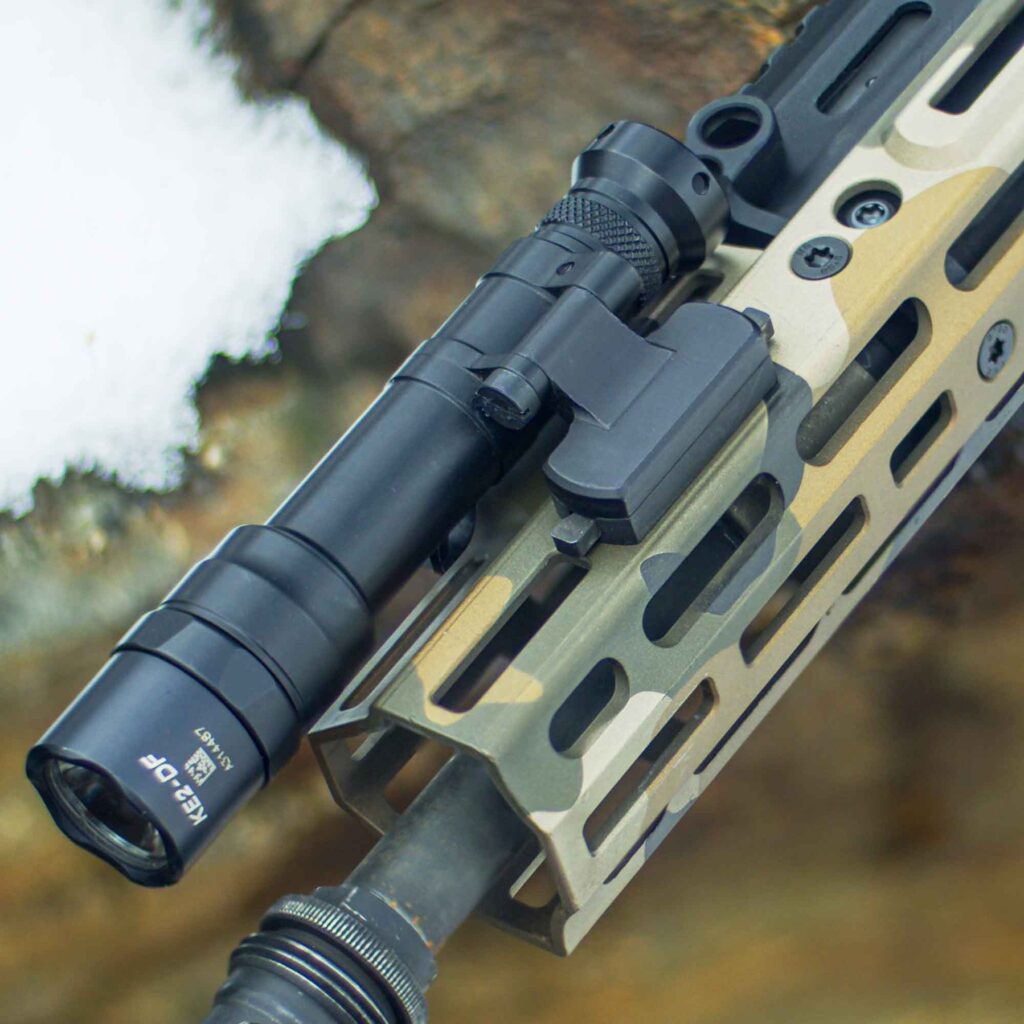
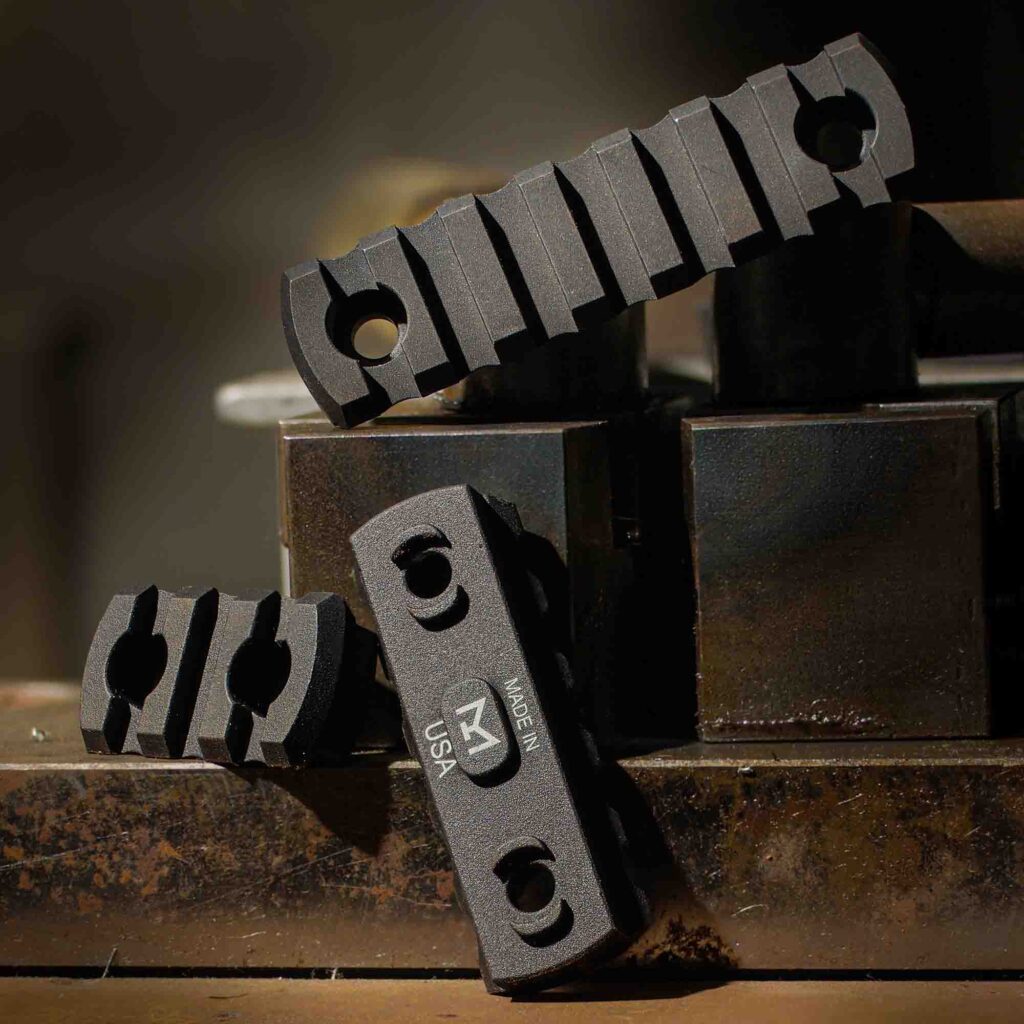
It is not a QD sling swivel. It is a patented mechanism that allows you to mount entire accessories—Picatinny rail sections, bipod mounts, and vertical grips—directly to your MLOK handguard and remove them just as quickly, all with the press of a finger.
It is a direct replacement for the standard MLOK T-Nut and screw. Where the traditional system relies on a screw’s torque to create a friction lock, the Kinect system uses spring-loaded, locking wedges to create a positive, mechanical lock.

The “How”: Deconstructing the Brilliant Kinect Mechanism
The “magic” of Kinect lies in its ingenious simplicity. It is an entirely self-contained unit with no loose parts to drop or lose.
While it seems instantaneous, the mechanism is a robust, multi-part system.
How to Install Kinect (A 2-Second Process)
- Align: You simply align the mount’s locking feet with the chosen MLOK slot.
- Press: You press the mount firmly down onto the rail. This pressure activates two small “release pins” on the bottom of the mount.
- Lock: The instant the triggers are depressed, the system “fires” two powerful, spring-loaded wedges outward. These wedges engage the inside of the MLOK rail with significant force, creating a rock-solid, positive lock. You will hear and feel a definitive “click.”
That’s it. It is installed and secure.
How to Remove Kinect (Just as Fast)
- Squeeze: On the side of the Kinect mount are two buttons.
- Retract: Squeezing these two buttons simultaneously overcomes the spring pressure and manually retracts the locking wedges from the rail.
- Lift: The entire accessory lifts cleanly off the handguard.
The Core Benefits: Why Kinect Changes Everything
The Kinect system isn’t just a minor convenience; it’s a fundamental shift in how you can interact with your rifle.
1. Unparalleled Speed and Mission Flexibility
This is the system’s “superpower.” You can completely reconfigure a rifle in seconds, not minutes.
- At the range? Mount your bipod and chronograph in 5 seconds.
- A 3-Gun stage starts close-quarters? Run a “slick” rail, then instantly “click” on your vertical grip or bipod for the next, longer-range stage.
- Packing for a hunt? Remove the bipod to fit the rifle in its scabbard, then instantly re-attach it in the field.
2. True “Hot-Swapping” and Cost Savings
Because the system is tool-less, Kinect allows you to “hot-swap” a single accessory between multiple rifles. Why buy three separate bipods for your three AR-15s? With a Kinect mount, you can own one high-end bipod and move it to whichever rifle you’re using that day in seconds.
3. A Completely “Slick” Rail
A major advantage of MLOK is its “negative space” design. Kinect honors this. When you remove a Kinect-mounted accessory, you are left with a perfectly clean, snag-free MLOK rail. There are no semi-permanent Picatinny sections or studs left behind to snag on gear, gloves, or barricades.
4. Zero Lost Hardware
Every shooter knows the pain of dropping a tiny MLOK screw or T-Nut into the grass or onto a dark range floor. With Kinect, this problem is eliminated. The entire mechanism is self-contained. There is nothing to lose.
The “Rules”: Understanding Kinect’s Critical Limitations
To use Kinect effectively, you must be an expert on what it’s not for. This is not a “magic bullet” for all attachments, and KDG is very clear about its intended use. Failing to respect these rules is the #1 source of user error.
Rule #1: NOT for Sighting Systems (Optics or Lasers)
This is the most important rule. Kinect is not designed to hold zero for optics, lasers, or any sighting system. The mechanism is incredibly strong, but it does not have the “return-to-zero” precision and absolute rigidity of a hard-mounted, torqued-to-spec system.
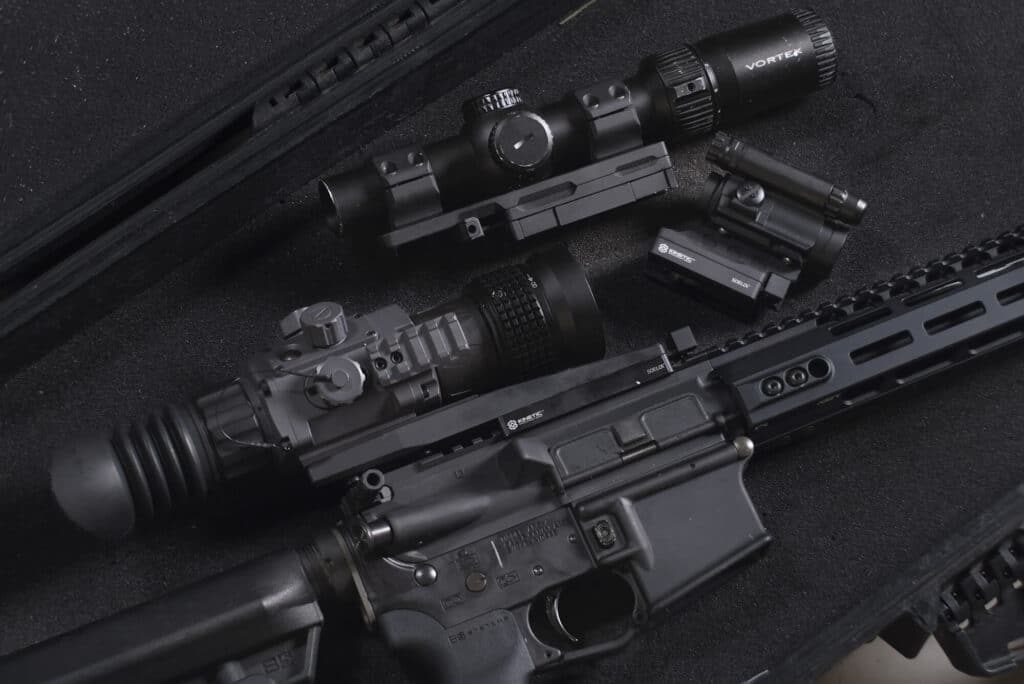
Expert Tip: For optics, KDG developed a different QD system called Sidelok. Kinect is for MLOK handguard accessories (grips, bipods). Sidelok is for Picatinny rail optics (scopes, red dots).
Rule #2: Be Aware of Heavy Recoil & Bipod Loading
Kinect is exceptionally strong for its intended purpose. However, it is not a traditional hard mount. KDG explicitly advises against using Kinect mounts on rifles chambered in calibers larger than .308/7.62.
Furthermore, it is not recommended for precision shooters who “heavily load” their bipods (i.e., pushing the rifle forward into the bipod with extreme force). This specific action can create enough leverage to disengage the locking wedges.
Rule #3: Handguard Compatibility
Kinect was designed and toleranced to fit the original, Magpul-spec aluminum MLOK handguards. While it works on the vast majority of high-quality rails, it may have a loose fit or not work at all with some polymer handguards or out-of-spec, budget-brand rails.
The Kinect Product Lineup: The Right Tool for the Job
Kinect is not a single product, but an ecosystem of solutions.
- Kinect MLOK Picatinny Rail Sections: This is the most popular product. It’s a small section of Picatinny rail (e.g., 3 or 7-slot) that uses the Kinect mechanism. This allows you to instantly attach any of your existing Picatinny-based accessories, like weapon lights or grips.
- Kinect Direct-Mount Bipod Mounts: These are highly sought-after. Instead of a Picatinny rail, these mounts offer a direct interface for your bipod, such as a Harris-style sling stud.
- Kinect Integrated Accessories: KDG also offers accessories with the Kinect system built directly in, such as the Kinect Garmin Mount. This is the cleanest, quickest and most direct application of the technology.
Final Verdict: Who is the KDG Kinect System For?
So, should you buy it? Here’s the simple breakdown.
The KDG Kinect system is for you if:
- You are a competitive shooter (like 3-Gun) who needs to rapidly change configurations between stages.
- You are a multi-rifle owner who wants to save money by “hot-swapping” one high-value accessory (like a bipod) between several guns.
- You are a range enthusiast or hunter who uses “situational” accessories—items you want on the rifle for one specific task (like zeroing) but want to remove immediately after.
- You value ultimate convenience and are willing to trade the absolute, “bomb-proof” security of a hard mount for game-changing speed.
Kinect is not a replacement for the traditional MLOK hard mount. It is a brilliant, highly specialized alternative. It represents a paradigm shift in firearm modularity, finally delivering on the promise of a truly adaptable, tool-less platform.


