



In the world of modern firearms, MLOK is the undisputed king. It has won the “rail wars” by offering a lightweight, low-profile, and modular standard. But once you’ve committed to the MLOK ecosystem, you face a second, critical decision: how do you attach your accessories?
This choice boils down to a core conflict: Speed vs. Security.
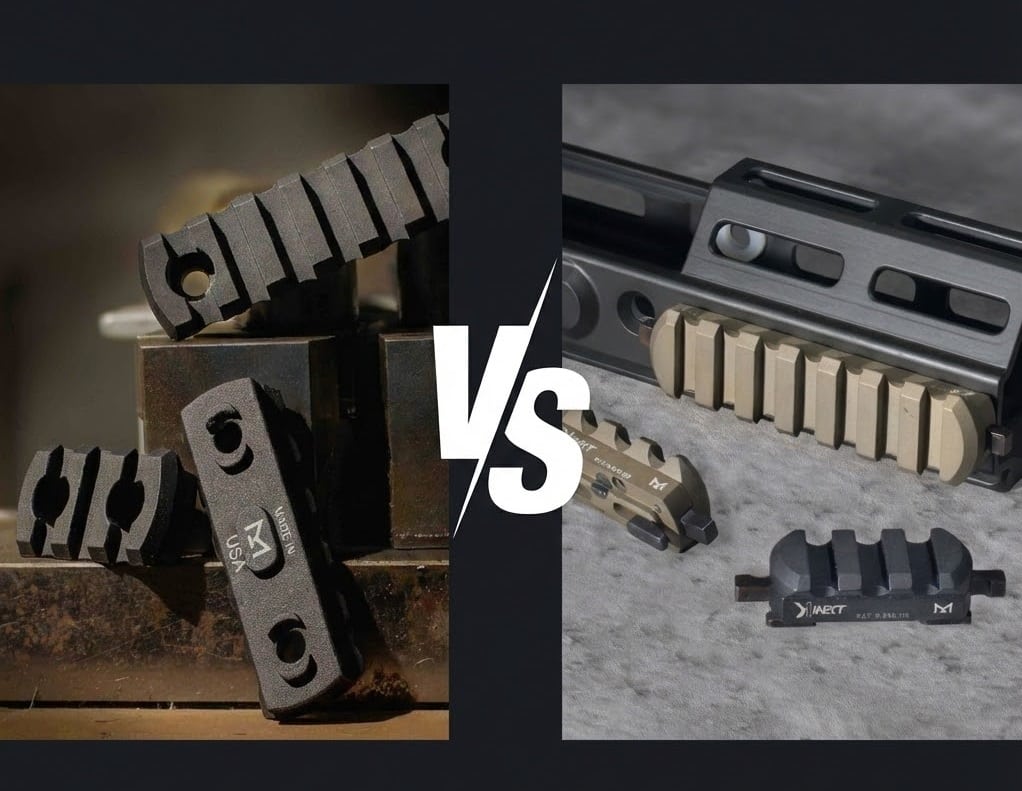
On one side, you have the revolutionary, tool-less QD (Quick Detach) MLOK system, epitomized by the Kinetic Development Group (KDG) Kinect line. It promises a world of “hot-swappable” accessories and instant reconfiguration.
On the other side, you have the battle-proven, “bomb-proof” Hard Mount—the standard T-Nut and screw that KDG and every other major manufacturer relies on for absolute, “set-it-and-forget-it” security.
Which one is right for you? This isn’t a simple choice, and the wrong one can lead to an accessory “popping off” under recoil or, conversely, leave you fumbling for an Allen key in the field.
We’re going to dissect this debate by putting the two philosophies, as represented by KDG’s own product lines, in a head-to-head comparison.
🔬 Anatomy of a Mount: What Are We Comparing?
Before we dive in, let’s establish a clear definition.
1. The Hard Mount (The “Set It and Forget It” Standard)
This is the original Magpul MLOK design. A Hard Mount uses two components:
- An MLOK T-Nut
- A Screw
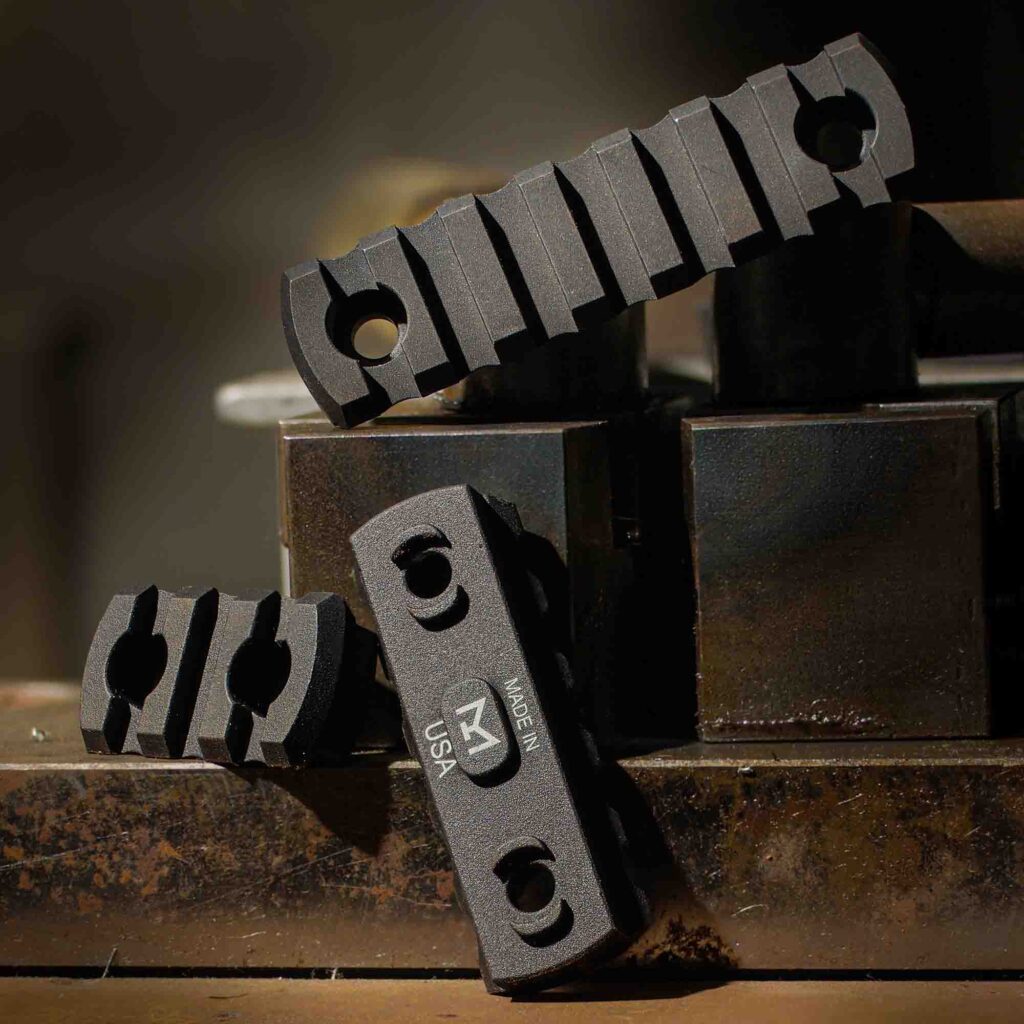
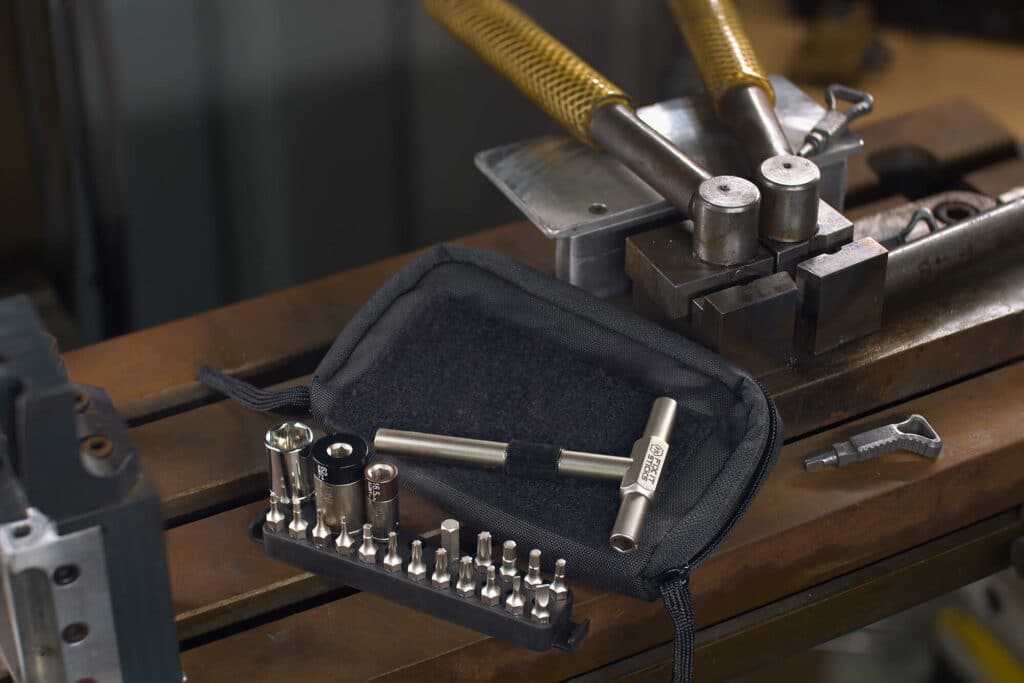
You align the T-Nut, insert it through the MLOK slot, and tighten the screw to a specific torque spec (usually with an Allen key). The T-Nut then cams 90 degrees and clamps the accessory to the inside of the handguard. KDG’s MLOK Hard Mounts, like their low-profile Picatinny rail sections, are the industry standard for this method.
- Its Philosophy: Absolute security.
- Its Action: Requires tools.
- Its Identity: A semi-permanent attachment.
2. The QD MLOK (KDG Kinect: The “Tool-less Revolution”)
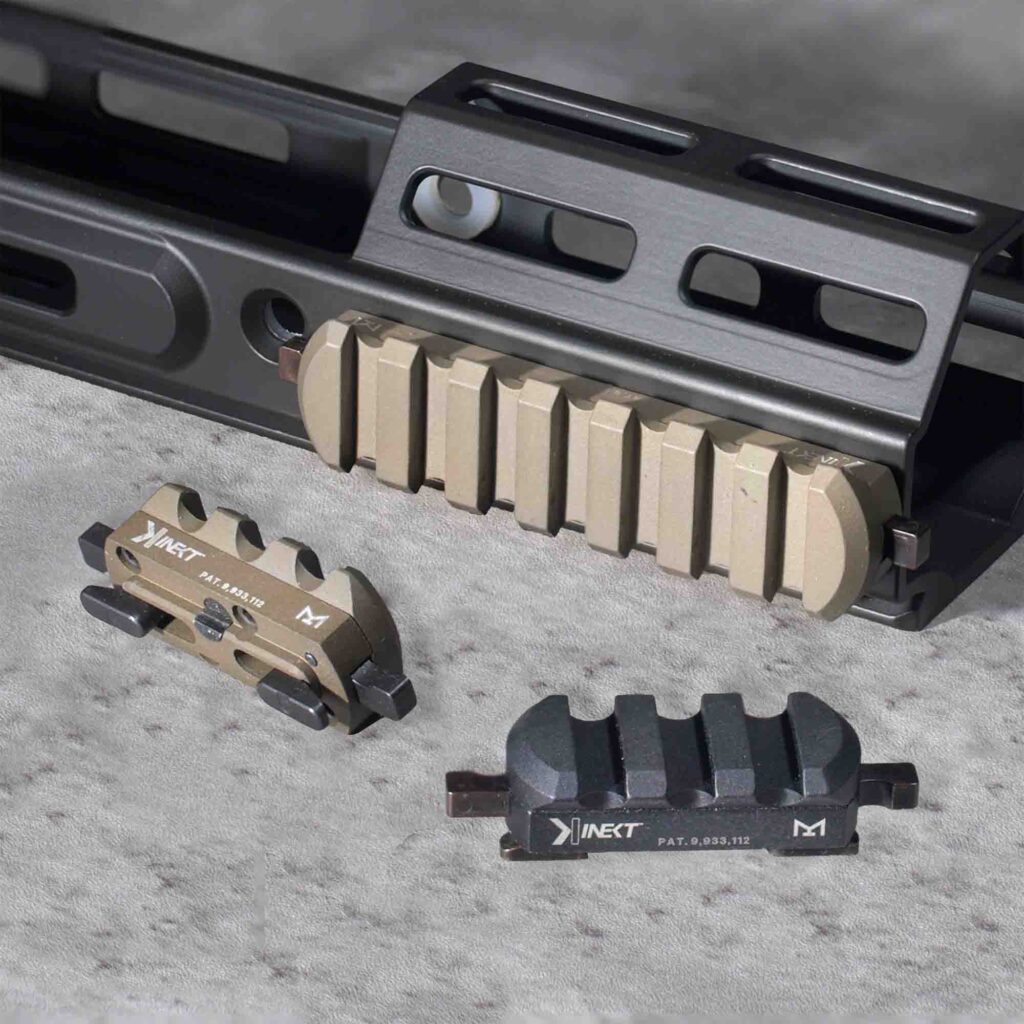
KDG’s Kinect is not a simple QD sling socket. It is a completely different, patented system. It throws the T-Nut and screw in the trash and replaces it with a self-contained, spring-loaded mechanism.
- To Install: You simply press the mount into the MLOK slot. Two tiny “release pins” on the base are depressed, which “fires” two locking wedges into place with an audible “click.”
- To Remove: You squeeze two buttons on the side of the mount, which retracts the wedges and allows the entire unit to be lifted off.
- Its Philosophy: Ultimate speed and convenience.
- Its Action: 100% tool-less.
- Its Identity: A temporary, on-demand attachment.
🥊 Head-to-Head: KDG Kinect vs. KDG Hard Mount
Let’s see how these two systems stack up in the categories that matter most.
| Feature | KDG MLOK Hard Mount (Standard) | KDG Kinect (QD MLOK) | Winner |
| Installation Speed | Slow. Requires an Allen key, T-Nut alignment, and proper torque. (1-3 minutes) | Instant. Press on to lock, press buttons to release. (2 seconds) | Kinect (No contest) |
| Absolute Security | Winner. When torqued, it is a semi-permanent part of the rifle. Built to withstand drops, recoil, and abuse. | Good, with critical exceptions. Strong for its intended use, but can be disengaged under specific stress (see below). | Hard Mount |
| Convenience | Low. Requires you to have the correct tool on hand to make any changes. | Winner. The definition of convenience. “Hot-swap” one bipod between multiple rifles in seconds. | Kinect |
| Internal Clearance | Potential Con. The T-Nut and screw tail can protrude into the handguard, interfering with the gas block or barrel on slim-profile rails. | Winner. The internal wedges are extremely low-profile, solving the gas block clearance issue that plagues many hard mounts. | Kinect |
| Weight & Profile | Winner. The simple T-Nut and screw is the most minimalist, lightest-weight system possible. | Slightly Heavier. The spring-loaded mechanism adds a small amount of bulk and weight, though it’s minimal. | Hard Mount |
| Compatibility | Winner. Works on all in-spec MLOK rails, including metal and polymer. | Metal Rails Only. KDG explicitly states Kinect is for in-spec metal handguards and not guaranteed to work on polymer rails (e.g., Magpul MOE). | Hard Mount |
⚠️ The Fine Print: Critical Limitations You MUST Know
The table above shows Kinect has a lot of “wins.” However, its losses are critical. Before you buy a Kinect, you must read and understand its “Rules of Engagement.”
Rule #1: DO NOT Use Kinect for Sights or Lasers
KDG is crystal clear on this: Kinect is not rated to hold zero. It is a convenience mount, not a precision mount. Your optics, offset red dots, and laser aiming modules MUST be on a Hard Mount.
Rule #2: DO NOT Use Kinect for Grips
Real-world user feedback is overwhelming on this point. If you use a Kinect for a vertical grip or handstop and apply aggressive force (like pulling it into your shoulder), you can “pop” the mount off the rail. This is a known limitation.
Rule #3: The Bipod Caveat (A “Light Duty” QD)
This is the most common use case, but it has a major caveat. Kinect is fantastic for:
- Attaching a bipod at the range for zeroing.
- Moving one bipod between several rifles.
- Quickly attaching a bipod for a single shot while hunting.
It is NOT for:
- “Heavily loading” the bipod (the common precision shooting technique of pushing forward into the bipod for stability).
- Heavy-recoiling rifles (KDG warns against use on calibers over .308).
Aggressive loading or heavy recoil can and has caused the Kinect to disengage.
🧑⚖️ The Verdict: Which System is Right for You?
The “Kinect vs. Hard Mount” debate isn’t about which is “better”—it’s about which is the right tool for the right job.
✅ You Should Use KDG MLOK HARD MOUNTS for…
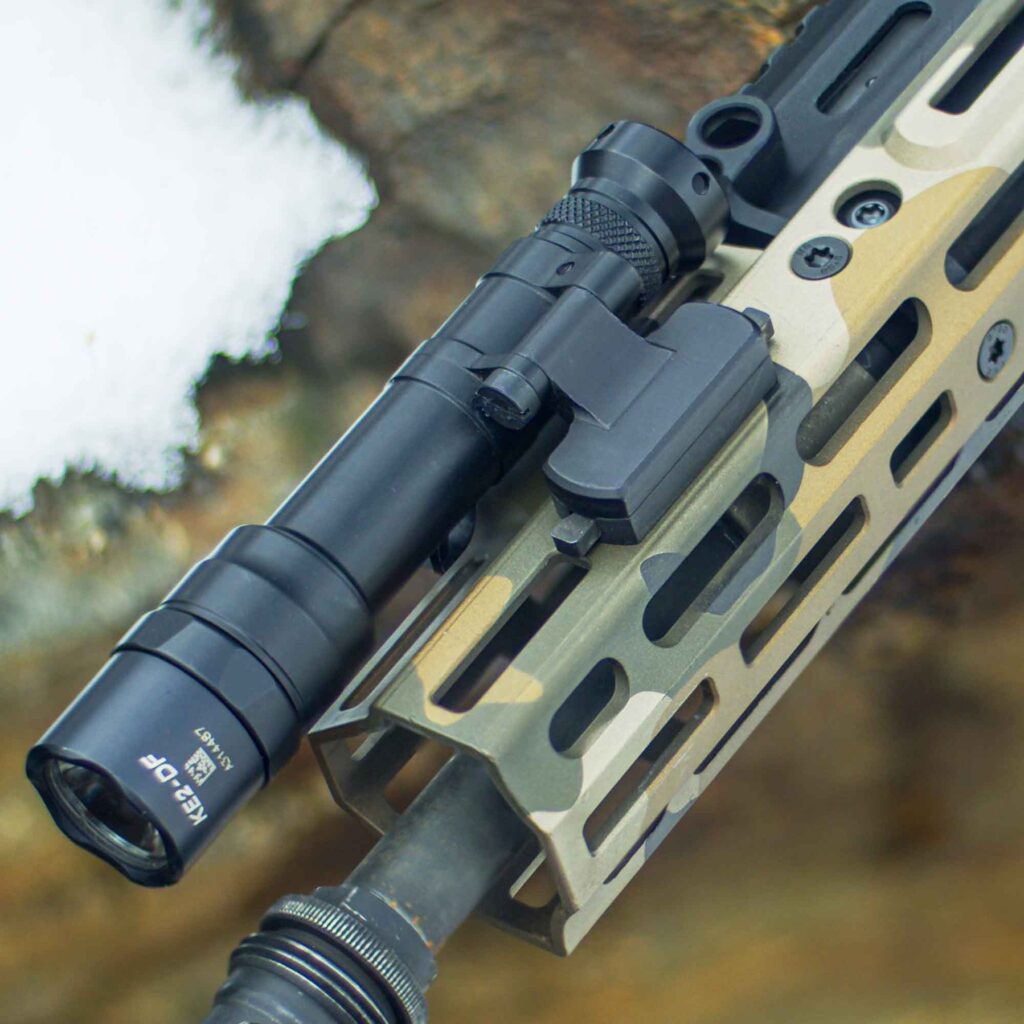
- “Duty” or “Serious Use” Accessories: Anything you bet your life on. This includes your weapon light, laser, and sighting systems.
- High-Stress Attachments: Anything you will apply force to. This includes vertical grips, handstops, and barrier stops.
- Precision Bipods: If you are a precision shooter who “loads” their bipod, you must use a hard mount for its rock-solid stability.
- Polymer Handguards: If you have a Magpul MOE or other polymer handguard, the Hard Mount is your only reliable option.
In short: A Hard Mount is for Security. You choose it when failure is not an option.
✅ You Should Use KDG KINECT (QD MLOK) for…
- “Hot-Swapping” Accessories: The killer app. You have one $300 bipod and three rifles. Kinect lets you move it between them in seconds.
- “Situational” Accessories: Items you don’t want on your rifle 100% of the time. This includes bipods for zeroing, chronographs (like the Garmin Xero), or a GoPro mount.
- Solving Clearance Issues: If you have a slim handguard and your standard MLOK screws are hitting your gas block, Kinect’s low-profile internal wedges are a brilliant (and often overlooked) solution.
In short: Kinect is for Speed and Convenience. You choose it when instant flexibility is more important than absolute, bomb-proof security.
For the ultimate setup, most professional shooters use a hybrid system: Their lights and lasers are Hard Mounted, while their “as-needed” bipod sits on a KDG Kinect mount.
By understanding the pros and cons of each, you can now build your rifle with confidence, knowing you have the right tool for every single job.


